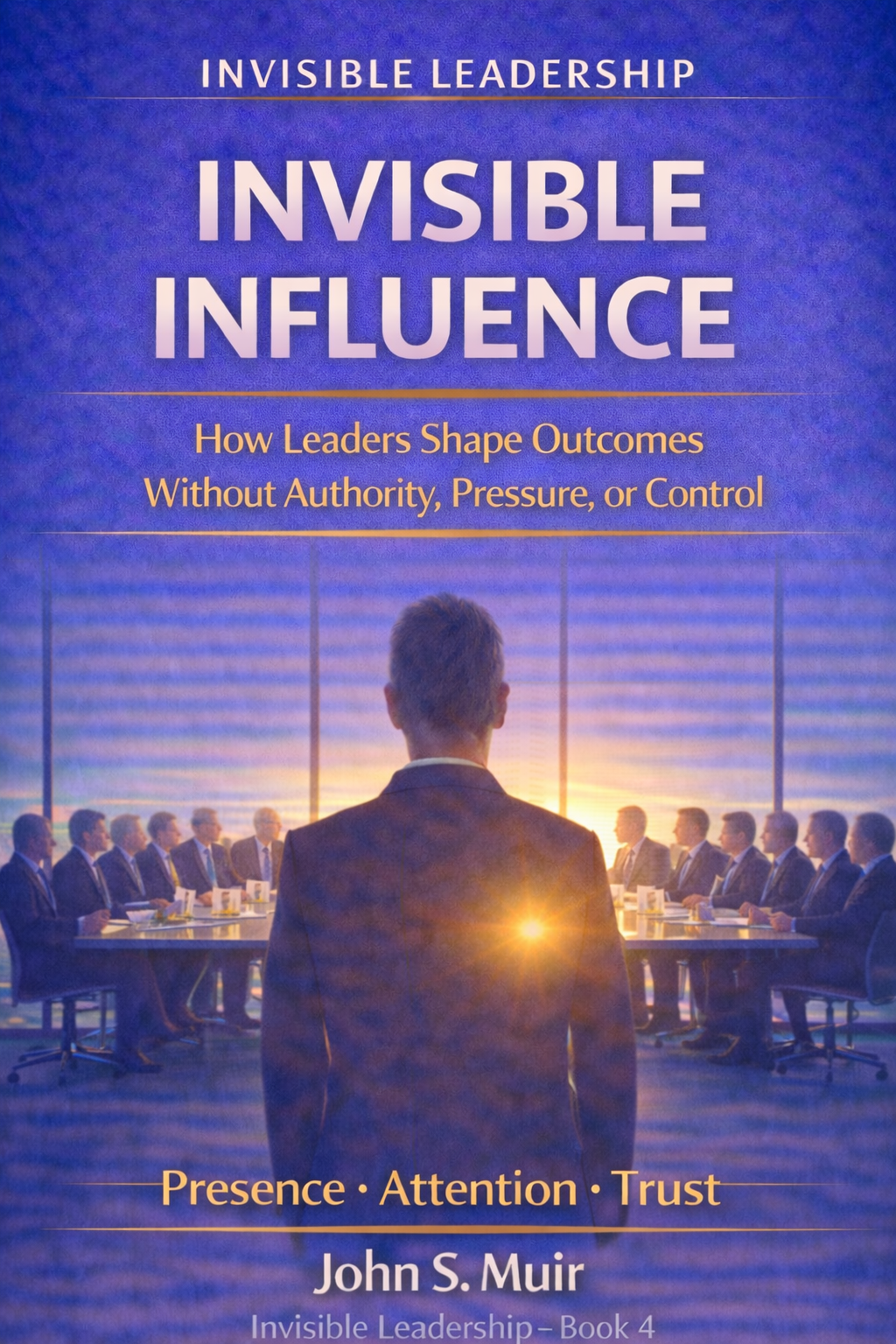
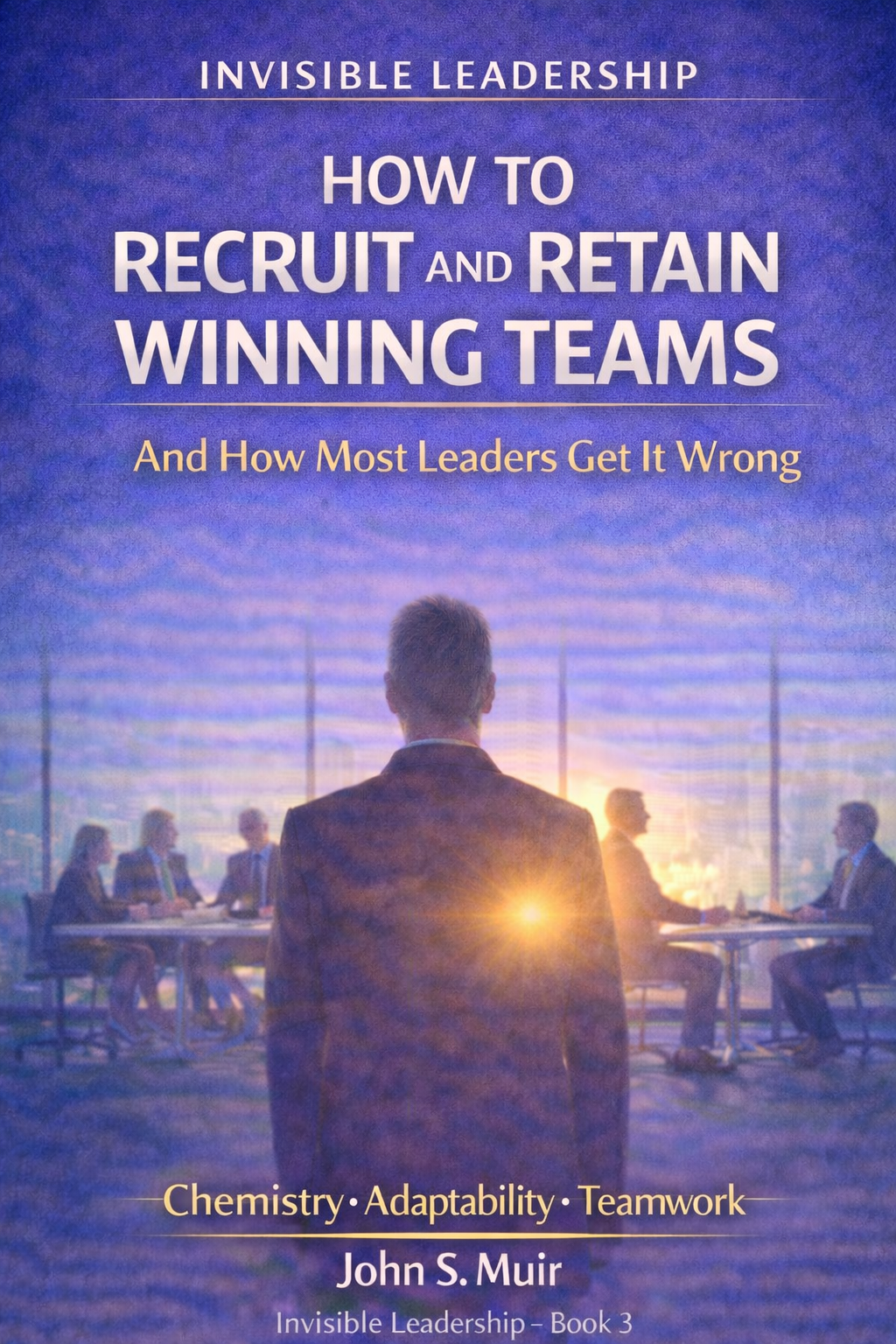
About The Book

MDI: An Origin Story

MDI: The Origin Story: How a Successful Company Lost Its Way—Without Realizing It (The Invisible Leadership Series Book 6)

Meridian Dynamics International (MDI) represents a case study in organizational drift—not failure, not crisis, but gradual structural misalignment that emerges even within successful, well-managed enterprises. At the beginning of the observed period, MDI is objectively performing well. Revenue remains stable. Customer delivery continues uninterrupted. Operational systems function as designed. From the perspective of dashboards and executive reporting, the organization appears healthy.


Invisible Leadership

How Quiet Leaders Build Strong Teams, Deep Trust, And Lasting Impact

Invisible Leadership challenges common assumptions about what effective leadership looks like. John S. Muir presents leadership as a discipline rooted in judgment, restraint, and trust rather than visibility or force. The book is divided into two parts. The first explores the principles of quiet influence, including how leaders shape outcomes without dominating decisions or conversations. Topics include trust under pressure, leading without authority, and creating space for others to lead. The second part follows a fictional organization, Meridian Dynamics International, through high-pressure situations that mirror real organizational challenges. This narrative format allows readers to see leadership principles applied in context, revealing how small decisions compound into cultural outcomes. Invisible Leadership is written for leaders who value lasting impact over recognition and want to build teams capable of sustaining performance.
The Communication Gap

How Leaders Miss What Matters

The Communication Gap examines why communication fails inside organizations despite good intentions. John S. Muir explains how systems distort messages as they move through layers of leadership, creating misalignment and frustration. Using Meridian Dynamics International as a case study, the book reveals hidden communication gaps that undermine trust and execution. John introduces a Communication Operating System designed to restore clarity, reduce noise, and support consistent alignment. This book helps leaders diagnose communication breakdowns and address root causes rather than symptoms. It is written for those responsible for coordination across teams and functions.
Recruiting And Hiring Stellar Teams

Why Most Get It Wrong

Recruiting And Hiring Stellar Teams challenge resume-driven hiring and rushed decision-making. John S. Muir shows how these habits weaken culture and increase long-term risk. The book reframes hiring as a leadership responsibility focused on strengthening teams. Topics include cultural fit, emotional steadiness, compensation signals, and the dangers of urgency. Readers learn how to protect existing teams while building capability. This book offers practical guidance grounded in experience rather than theory.
Reward And Retention

How To Motivate And Retain Skilled Talent And Why Most Get It Wrong

Reward And Retention explores why people disengage and leave organizations. John S. Muir explains that turnover rarely results from a single event. It develops through accumulated friction, unmet expectations, and erosion of identity. The book reframes leadership as stewardship of identity rather than management of output. Leaders learn how to recognize early warning signs, support growth, and create environments where people choose to stay. This book is written for leaders committed to long-term team strength.
Invisible Architecture

How Leaders Design Organizations That Think, Decide, and Endure Without Them

Invisible Architecture, 5th installment of the Invisible Leadership book Series, examines how strong organizations are built through intentional design rather than constant management. Drawing from decades of leadership across entrepreneurship and global operations, John S. Muir shows how clarity, disciplined communication, and trust-based accountability allow teams to think independently, make sound decisions, and perform consistently under pressure. The book reframes leadership as a systems discipline in which structure, culture, and behavior work together to produce durable results. As the capstone of the series, Invisible Architecture offers practical frameworks for leaders who want to move beyond firefighting and create organizations that scale responsibly, adapt to change, and endure over time.